Why Professional Bakers Choose Aluminum Foil — Perfect Combination of Heat Resistance and Even Heat Distribution
In both home baking and professional kitchens, aluminum foil has become an indispensable tool for bakers, thanks to its excellent heat resistance and uniform thermal conductivity. Compared with ordinary baking paper, aluminum foil can withstand much higher temperatures and is suitable for a wider range of cooking scenarios, helping baked goods achieve more consistent and desirable results.
Heat Resistance: Effortlessly Handling Various Baking Temperatures
Aluminum foil has a melting point of up to 660 degrees Celsius, far exceeding typical baking temperature ranges. This means that whether you are roasting meats, baking pasta casseroles, or making puff pastry desserts, aluminum foil maintains its stability without softening, burning, or releasing harmful substances. In contrast, regular baking paper may begin to curl and char at temperatures exceeding 200 degrees Celsius, compromising both performance and food safety.
Even Heat Distribution: Achieving Flawless Baking Results
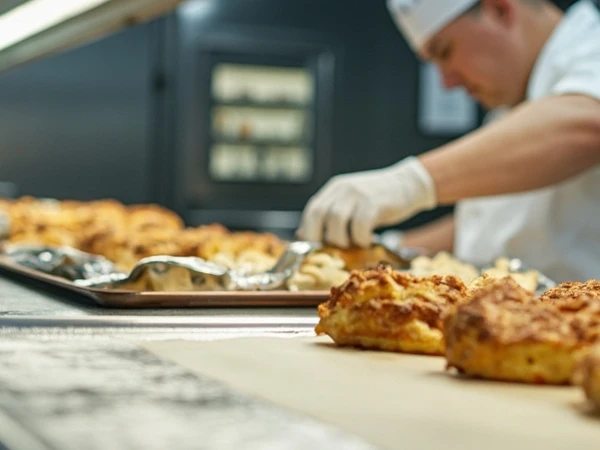
Another major advantage of aluminum foil is its excellent thermal conductivity. The aluminum metal quickly and evenly transfers heat, allowing baked goods to develop a golden, crispy exterior while retaining appropriate moisture inside. This characteristic is particularly crucial when making cookies and pastries — the slight "shielding effect" of aluminum foil on the bottom prevents excessive browning while allowing heat to surround the dough evenly from all sides, creating the ideal baking environment.
Versatile Applications: From Anti-Stick Liner to Heat Retention Cover
Beyond serving as a baking tray liner, aluminum foil has many other uses in baking. Crumpling aluminum foil into a ball and placing it at the bottom of a baking tray can help distribute heat more evenly. When making muffins, aluminum foil liners can better withstand the weight of batter compared to paper cups. After baking is complete, covering baked goods with a layer of aluminum foil provides temporary heat retention, preventing the finished product from cooling and softening too quickly.
Choosing Food-Grade Aluminum Foil to Protect Your Family's Health
It is important to note that not all aluminum foil is suitable for direct food contact. Low-quality aluminum foil may contain heavy metal residues that can migrate into food at high temperatures. It is recommended to choose products marked with a "food-grade" label and avoid aluminum foil with colored printing or coatings. Baodafor food-grade aluminum foil is made from high-purity aluminum materials and undergoes strict quality testing, making it safe for direct contact with various food types, ensuring a worry-free baking experience.
Whether you are enjoying weekend family baking sessions or running high-output production in a professional kitchen, aluminum foil — with its heat resistance, even thermal conductivity, and versatility across multiple applications — has become an all-around essential in the baking world. Mastering the correct way to use it can elevate your baking results to the next level.