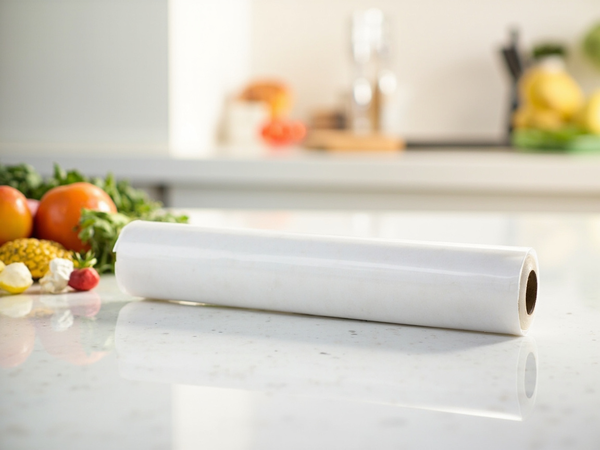

In daily life, PE cling film has become an indispensable kitchen tool for food preservation. Yet when comparing different cling films, why do some products stretch easily and spring back to self-seal around containers while others feel stiff and difficult to use? The answer lies in two core physical properties: stretchability and elastic recovery.
Stretchability: The "Elastic Gene" of Premium Cling Film
The stretchability of PE (polyethylene) cling film originates from its molecular structure. High-quality PE cling film undergoes specialized formulation design during production, giving the molecular chains excellent flexibility and extensibility. When a user tears off a segment from the roll, it can be easily stretched to 1.5 to 2 times its original length without breaking or tearing. This characteristic enables cling film to cover containers of various shapes—whether round, square, or irregular—achieving effective coverage in each case.
Elastic recovery is the core property that allows cling film to seal around containers. When stretched, the molecular chains inside the film quickly rebound, generating a contracting force. This contracting force pulls the cling film taut and automatically seals it against the container's edges, creating a relatively airtight environment. In contrast, cling film with poor elastic recovery struggles to tighten automatically after stretching, resulting in loose coverage and significantly reduced preservation effectiveness.
Key Factors Affecting Stretch and Recovery Performance
Raw material formulation is the primary factor determining a cling film's stretch and recovery performance. Different manufacturers use varying base resin and additive ratios, which directly affect the film's physical properties. Additionally, the stretching ratio and cooling rate during extrusion processing influence the arrangement of molecular chains, thereby affecting the final product's elastic performance. Baodafor strictly controls formulation and process parameters during PE cling film production, ensuring each roll delivered has stable and reliable stretch and recovery performance.
Consumers can use a simple test to evaluate a cling film's stretch and recovery performance: take a small piece of cling film, gently stretch it, then release. Observe whether the film springs back quickly and tightens at the edges. If the cling film rebounds rapidly and the edges auto-seal, it indicates excellent stretch and recovery performance—meaning it will deliver solid sealing and preservation results in actual use.
Premium PE cling film, with its outstanding stretch and elastic recovery properties, serves as a reliable choice for household food preservation. Understanding these physical characteristics helps consumers better utilize cling film for optimal food freshness in daily life.