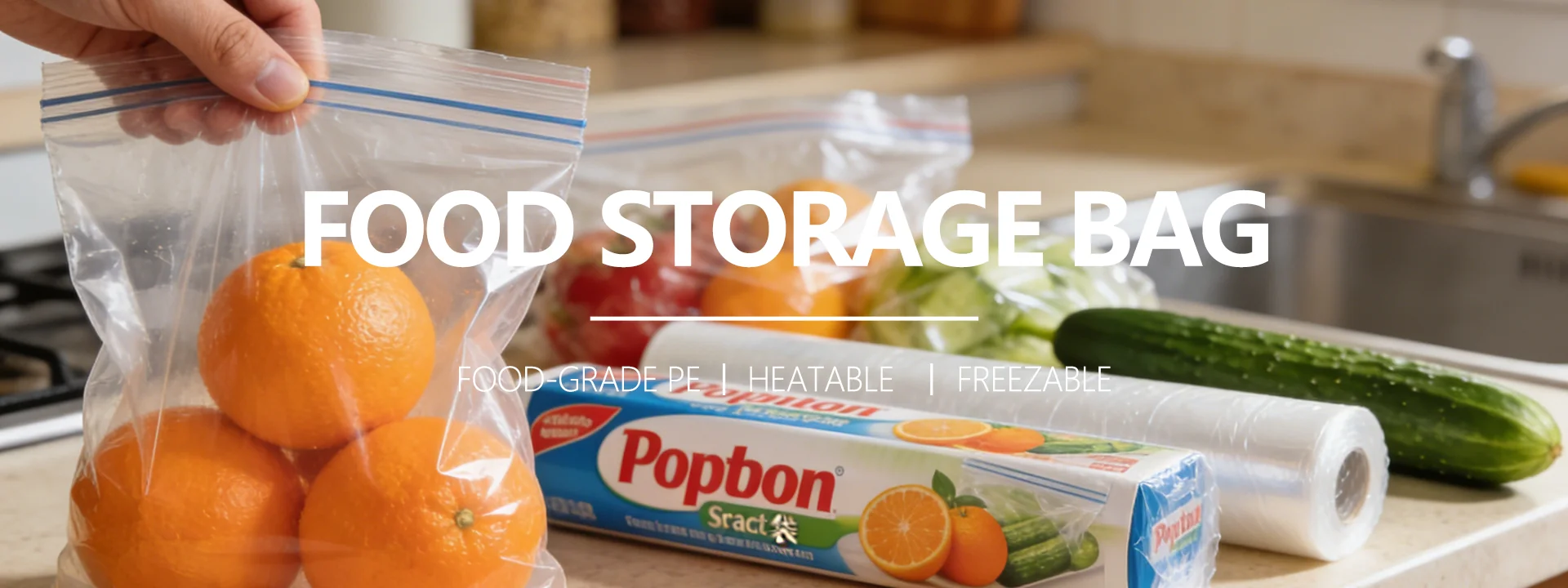
In daily life, cling wrap and ziplock bags are the two most common types of food packaging in household refrigerators. While both serve a preservation purpose, their principles differ, and each is suited for different types of food.
Sealing Principle of Cling Wrap
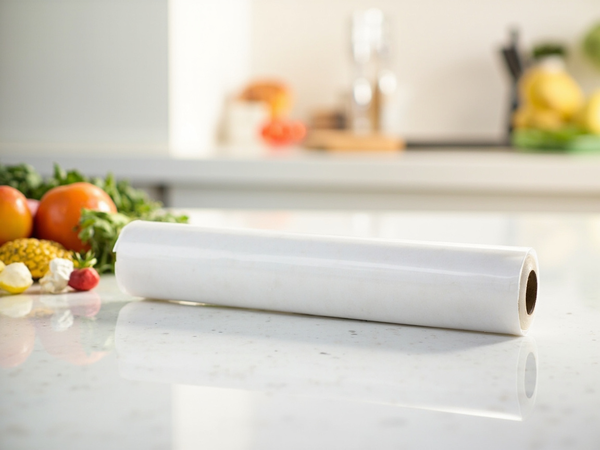
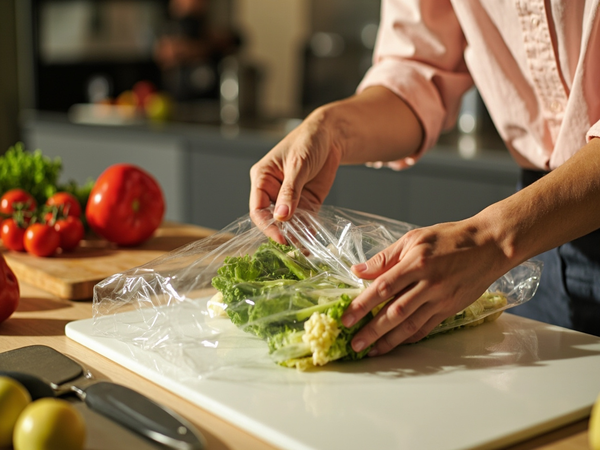
Cling wrap primarily relies on the material's self-adhesive property and flexibility to conform to the surface of food, creating a physical barrier that blocks air and moisture exchange. PE (polyethylene) cling wrap is safe, non-toxic, and meets food-grade standards. It is ideal for covering containers such as plates and bowls, or for wrapping directly around food items. Cling wrap is best suited for short-term preservation, particularly for vegetables, fruits, and cooked foods stored temporarily.
Sealing Principle of Ziplock Bags
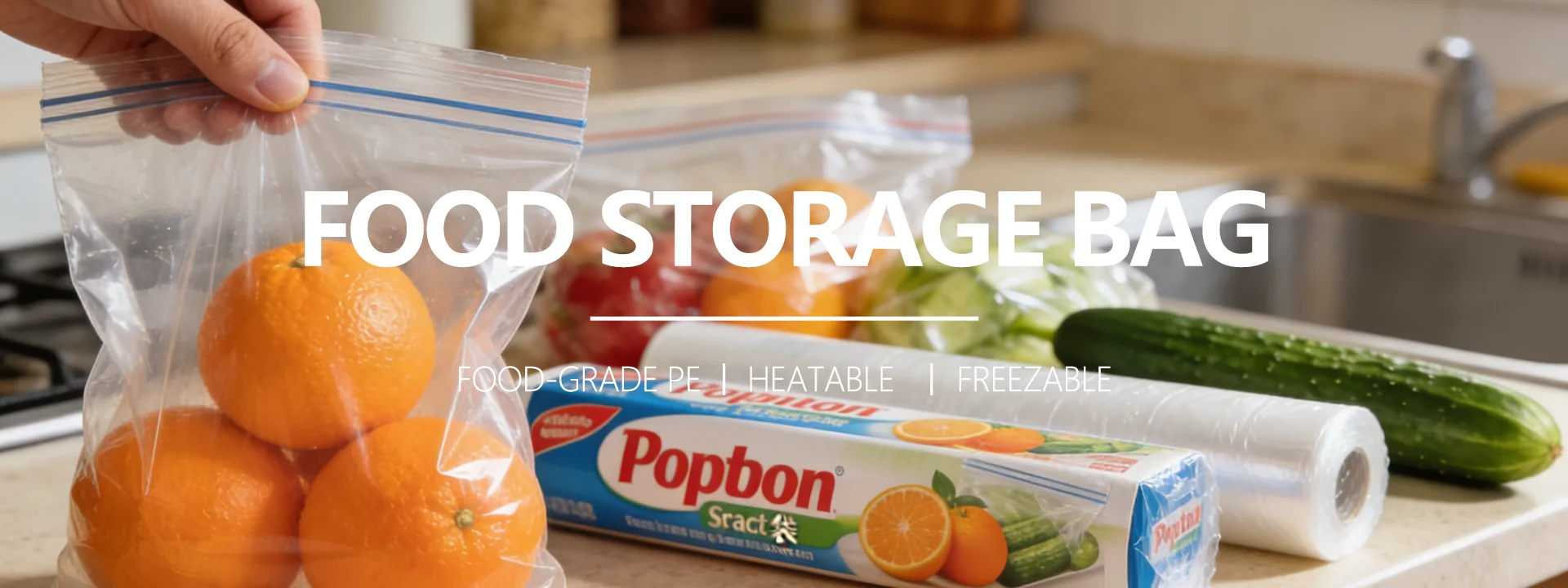
Ziplock bags feature a double-layer structure with a sealing strip. Once pressed shut, the bag creates a strong airtight seal that effectively prevents air and moisture from entering or escaping. This design makes ziplock bags ideal for storing liquids or foods requiring longer freezing periods, such as soups, sauces, and meats. Additionally, ziplock bags can stand upright, making them easy to access and convenient for categorizing and organizing refrigerator space.
How to Choose Based on Food Characteristics
For short-term preservation of produce that needs some breathability, such as leafy greens and fresh fruits, cling wrap is the preferred choice. For long-term freezing or storing liquid foods, ziplock bags offer more reliable sealing performance. Consumers are advised to choose the appropriate packaging based on actual usage scenarios to achieve optimal preservation results.
Baodafor specializes in food-grade packaging production, providing cling wrap and ziplock bag products that meet national safety standards, with reliable quality widely used in both household and restaurant settings.