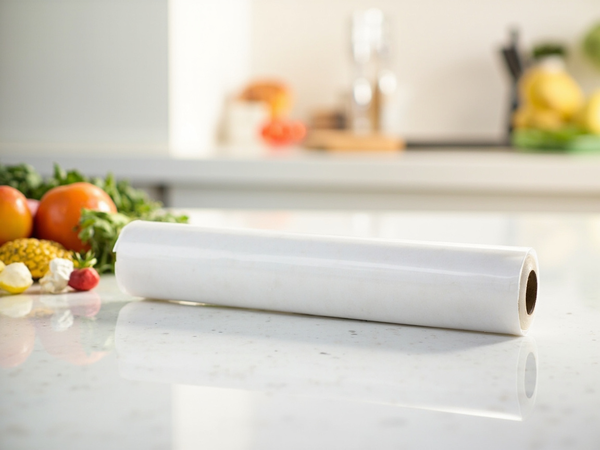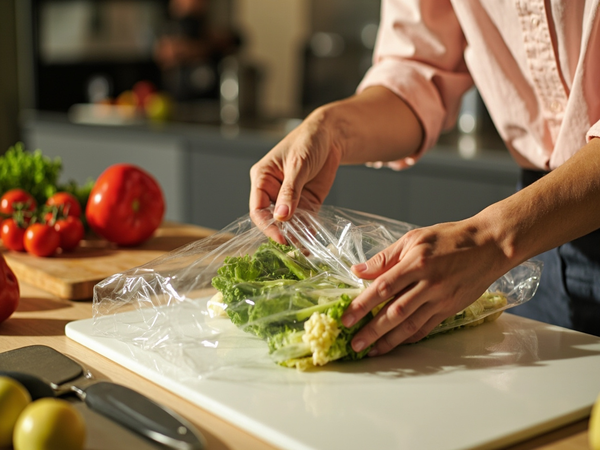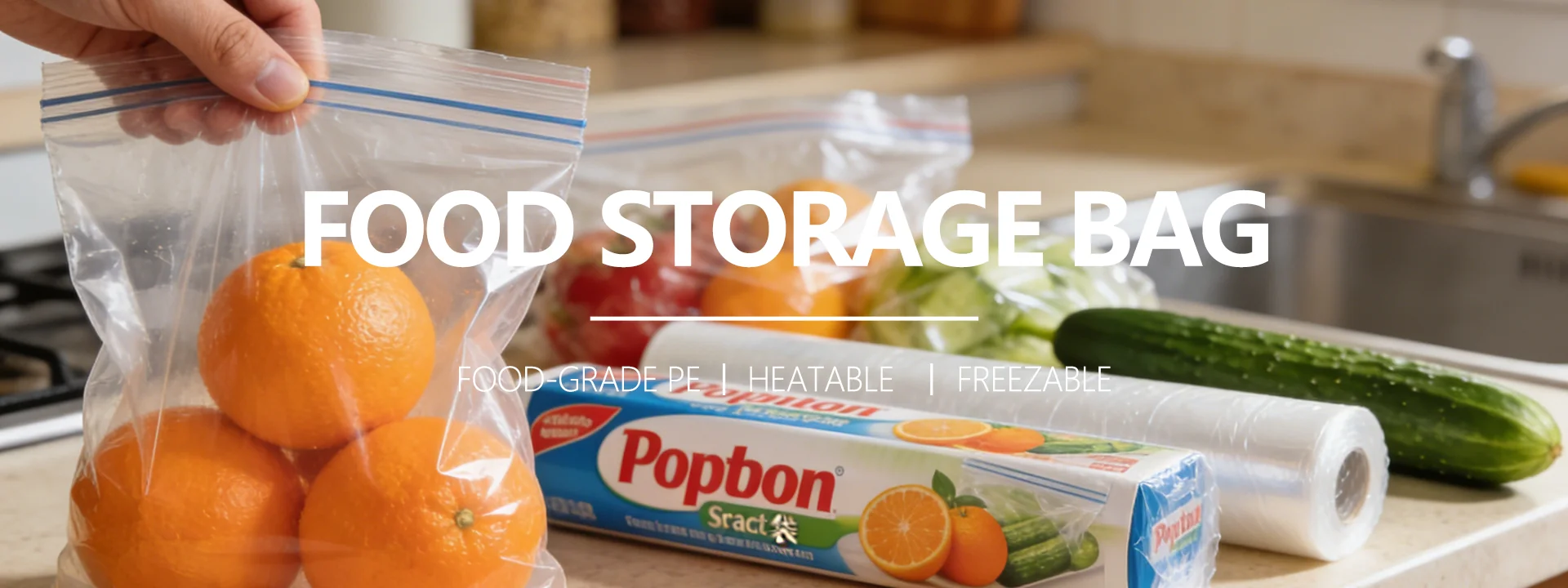
Cling wrap is one of the most common food packaging materials in our daily life, but many people notice that when the wrap covers food, condensation often builds up due to temperature differences, obscuring the view of the food inside. Anti-fog cling wrap is precisely a functional product designed to address this pain point.
The core principle behind anti-fog cling wrap involves applying a microscopic anti-fog agent to the surface of ordinary PE cling wrap. This agent reduces the surface tension between water vapor and the film surface, allowing condensation to form a uniform transparent water film instead of tiny droplets, thereby maintaining excellent clarity. This principle is similar to how anti-fog coatings work on eyeglasses, though applications in food packaging require extra attention to safety and food contact material standards.
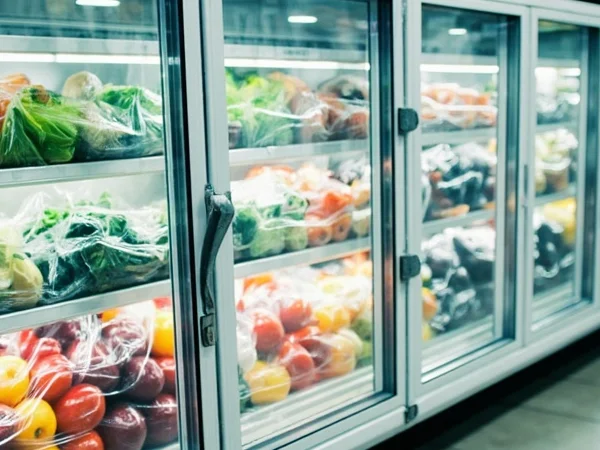
In supermarket refrigeration display cases, the advantages of anti-fog cling wrap are particularly evident. Ordinary cling wrap tends to accumulate visible water droplets in low-temperature environments, while anti-fog cling wrap can still clearly display the color and appearance of food even at around four degrees Celsius. This not only makes it easier for consumers to select products but also prevents food contamination caused by frequent opening of packaging to check contents.
Anti-fog cling wrap also performs exceptionally well in household settings. When a freshly cooked dish is covered with anti-fog cling wrap and placed in the refrigerator, it can still be clearly seen through the film when removed later. Consumers can determine whether the food is still fresh without having to uncover it, reducing the number of times food is exposed to air and helping extend preservation.
In high-temperature and humid regions like Southeast Asia, anti-fog cling wrap is especially popular. Consumers in these areas have higher daily requirements for food preservation, and the anti-fog feature ensures that cling wrap continues to provide visibility and protection even in hot climates.
It is worth noting that anti-fog cling wrap is not suitable for all scenarios. For example, when microwave heating is required, consumers should confirm whether the product is labeled as microwave-safe to avoid adverse reactions from anti-fog agents under high temperatures.