Categories
Tag: food grade packaging
Found 248 article(s)
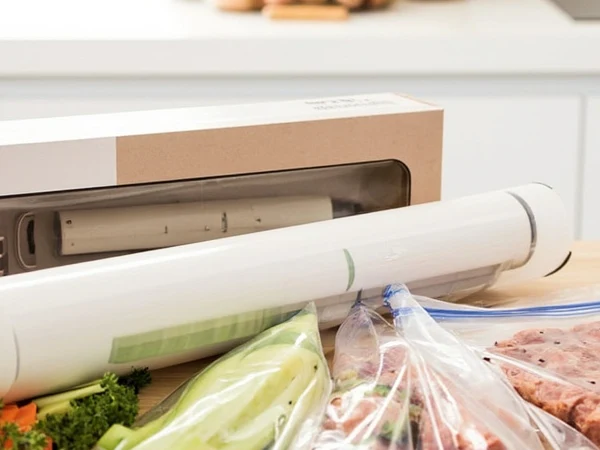
Handling Structures for Ziplock Bags and Cling Film: How Handle Holes, Hang Holes and Cutter Boxes Balance Retail Display with Kitchen Use
Handle holes, hang holes and cutter boxes look like converting details, yet they connect retail display efficiency, kitchen usability and line stability at the same time. This article breaks down the three handling structures on ziplock bags and cling film: how handle hole count, hole size, load rating and distance to the heat seal have to be matched; how hang holes interact with hook spec, centre of mass and the zipper compression zone; how tear notches, cutter tooth pitch and pre-cut baking sheets affect the way packs are opened. It also covers how each structure is inspected, and why they are offered as optional items inside the specification system, with hole position and hole size settled at sampling.

Alcohol Packaging Goes Multi-Format: How Aluminum Foil Bottle Seals and Ziplock Bags Split the Work in Draft Beer and Bulk Wine
Alcohol packaging is moving from a single bottle format to bottles, kegs and pouches running in parallel, which splits sealing and barrier performance across different materials. This article covers the three jobs carried by the aluminum foil bottle liner - blocking oxygen and light, providing tamper evidence, and working with labels and shrink film - the demands PE ziplock bags face in keg and draught beer pouches, including a wrinkle-free seal area, evacuation without residue, jaw-mark placement and low-temperature toughness, the sealing, light-blocking and code-placement requirements of portioning bags in bulk wine retail, the temporary covering role of cling wrap and ziplock bags in winery and brewery storage, and three common traps in specifying materials.

Baodafor Builds a Workshop Noise Control and Hearing Protection System: Identifying Noise Sources, Reducing Noise at Source and Hearing Protection Provision
Workshop noise on a food packaging line is not a comfort issue; it destabilises the operating precision behind sealing temperature, film tension and other key parameters. Baodafor splits noise management into four steps: identifying mechanical, airflow and impact noise sources at named workstations; reducing noise at source with a fixed order that puts removing abnormal contribution before adding silencing; providing earplugs and earmuffs with wearing training at positions where noise cannot be eliminated; and keeping identification records, treatment confirmations and issue ledgers for later re-checking. This article explains how that system connects to cleanliness around food contact surfaces and to defects such as mis-seals and off-centre seals, and it sets out the hard constraints any noise reduction measure has to respect: equipment cooling, maintenance access and fire escape routes.

Stress Marks on Ziplock Bags: Why PE Film Folds and Sealed Edges Look White and How Quality Is Judged
Whitish stress marks on the bottom gusset and sealed edges of ziplock bags are regularly misread as damp film or degraded material. This article explains how stress marks form in PE film during orientation setting at the extruder, gusset folding and heat sealing, and separates them from four look-alike conditions: moisture fogging, ink or coating chalking, static-attached lint and ageing embrittlement. It then sets out the inspection routine - where to look, the pull-flat recoverability test, constant temperature and humidity conditions, visual grading into none, slight and obvious, and retained sample practice - plus four process actions: a larger fold radius, sealing parameters held inside their window, stable unwind tension and a formulation matched to cold service.

Baodafor Standardizes Die Cleaning and Screen Change on Film Blowing Machines: Controlling Film Thickness and Cleanliness Upstream
On a blown film line, the starting condition of a roll of PE food packaging film is decided by the die and the screen pack, not by the slitter or the winder. Deposits in the die, a loaded screen or a poorly clamped screen changer push differential pressure up and write thickness variation, surface specks and off-notes into the whole roll; by the time those defects surface at the bag-making station or in a customer warehouse, the root cause is usually hard to reconstruct. This article explains why die cleaning may only be done with specified non-metallic tools, why screen change timing should follow pressure and motor current trends rather than blockage, and sets out a standard operating sequence: controlled slowdown and depressurizing, die cleaning, screen clamping, a low-speed trial and record keeping. It also shows what these upstream steps mean for the optical performance of PE cling wrap, the thickness consistency of ziplock bag film, and the coating and laminating quality of aluminum foil and baking paper.

Shelf-Stable Food Goes Mainstream: How Retort Pouches and Aluminum-Foil Composites Replace Metal Cans
Moving tomato products, soups and curries from metal cans into retort pouches removes the cold chain, and that is a process-driven redesign of the packaging structure rather than a simple container swap. This article breaks down the three cold-chain cost ledgers behind ambient conversion, the hard requirements that 121°C wet heat sterilization places on barrier performance and sealing, where aluminum foil sits in the multilayer laminate, the shelf-life validation logic built on commercial sterility, internal pressure rise and accelerated testing, the real differences between metal cans and retort pouches in weight, opening experience and compression behavior, and the knock-on changes across equipment, substrate supply and secondary packaging.

Seal Integrity Testing for Ziplock Bags: How Dye Penetration, Bubble and Vacuum Decay Methods Work Together
A ziplock bag can have a strong seal and still leak, and what reaches the customer then is not just a return, it is trust in the whole shipment. Seal strength and seal integrity are different things: the first measures how much force the seal tolerates, the second asks whether the seal contains a continuous leakage path even a few dozen microns wide. This article compares dye penetration, bubble and vacuum decay methods by sensitivity, throughput and use case, explains how sampling should follow a tightened GB/T 2828 AQL approach at ramp-up and after material or parameter changes, breaks down the root causes and countermeasures for five common failure modes (trapped contamination, process parameter drift, web wrinkling, the zipper exemption zone and pinholes in the film), and sets out how ziplock bags, PE cling wrap and aluminum foil differ in integrity testing, with a practical combined-method selection guide.

Baodafor Builds a Quarantine and Disposal System for Nonconforming Material: Every Rejected Film Roll Has a Clear Basis and a Defined Fate
A quarantined film roll that mixes into a good batch and reaches the customer costs far more than one roll of material: it costs the customer trust in the whole batch. Baodafor builds a quarantine and disposal system for nonconforming material. The workshop is zoned into pending-judgment, nonconforming and released-goods areas, status marking travels with the material, and every quarantine and every disposition is entered in a written log. Judgment rests on test data rather than on whether something looks acceptable, and disposition runs through four routes: rework, downgrade with stated limits, supplier return or claim, and scrap. The system is linked to batch traceability, retain samples and customer complaint handling, which is what makes delivery certainty possible across parallel production of ziplock bags, PE cling wrap, aluminum foil and baking paper.
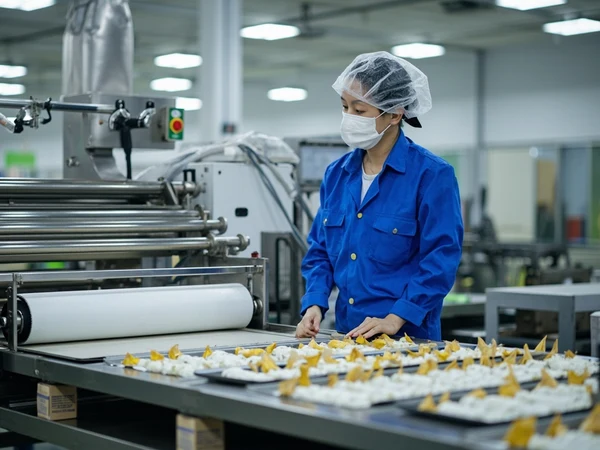
Confectionery Packaging Goes Premium: How Aluminum Foil Protects Shelf Life and Shelf Appeal
Chocolate and candy aromas are among the most light-sensitive qualities in food: cocoa butter oxidizes under light and oxygen, and a few weeks of retail lighting is enough for the aroma to fade. When confectionery packaging moves premium, the first addition is rarely heavier paper but the invisible aluminium layer: it blocks almost all light, has an extremely low oxygen transmission rate and, once laminated, supports shelf life measured in months or seasons, while the sealing layer closes the pack and the paper layer provides stiffness and printability, blocking both moisture migration and aroma transfer between neighbouring shelves. Bar, inflated pillow, filled and twist-wrapped formats each demand a different structure, while ziplock bags, PE cling wrap and baking paper cover family repacking, short-term protection and gift box dividers. This article walks through light oxidation mechanisms, laminate layers and process zones, per-category division of labour, food contact compliance and export audits, and closes with a selection checklist for buyers.
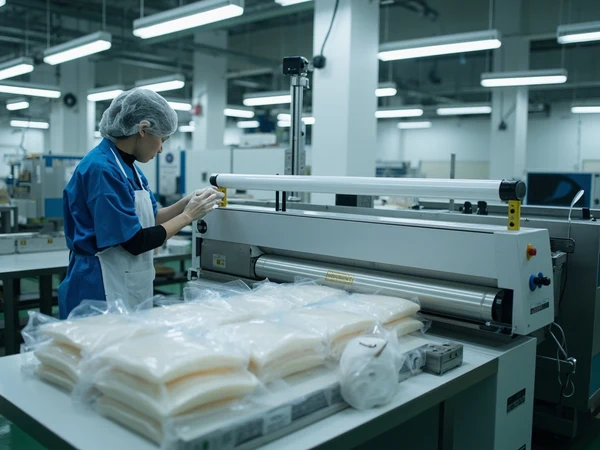
Setting the Heat-Seal Window for Ziplock Bags: How Temperature, Pressure and Time Balance Seal Strength Against Premature Sealing
When the same roll of ziplock film behaves differently on different sealing machines, the cause is rarely unstable material: heat sealing is a window, not a point. The result is set by temperature, pressure and time, which can compensate for one another, and what really determines usability is how wide the working range can be before something goes wrong. The lower boundary is a weak seal and leakage, the upper boundary is a sticky mouth and premature sealing. Melt flow rate, slip additive deposit, gauge and structure on the material side, and band material, sensor deviation and cooling on the equipment side all move or narrow that window. This article walks through stepped qualification to find the plateau, the investigation order for four common defects, and the parameter guidance sheet and first-article confirmation used with customers, showing how a heat-seal window becomes handoverable data instead of operator memory, so ziplock bags seal reliably, seal well and stay stable batch to batch on the customer line.