Handling Structures for Ziplock Bags and Cling Film: How Handle Holes, Hang Holes and Cutter Boxes Balance Retail Display with Kitchen Use
Buyers of food packaging normally look at two things first: whether the pack fits the product, and whether it keeps that product fresh. A third factor often decides how the pack actually performs in use, and it is not a material property at all: how convenient it is to pick up and open. A portion bag with no handle has to be dragged by a pinched mouth once it is full of gravy, and the sauce ends up on the worktop the whole way. A roll of PE cling film with no cutter box gets crumpled into a ball when no scissors are to hand, and most of the roll is wasted that way. Both failures come down to handling structure, not to material performance.
During structure sampling for customers, Baodafor finds that handling structure is rarely the first requirement customers raise, yet it is where most line trials, rework requests and complaints end up. This article takes the three most common handling structures on ziplock bags and cling film — handle holes, hang holes and cutter boxes — and explains what scenario each one serves, what hard constraints apply during converting, and how each one should be inspected to count as qualified.
1. Handle Holes: Carrying a Filled Bag with One Hand
Handle holes serve scenarios where a portioned bag still has to be moved: portioning at a supermarket counter, meal prep in a central kitchen, and a household freezing a whole batch of meat at once. The point of a handle hole is not simply to punch an opening; it is to give the load a sensible place to hang from.
The first consideration is the number and layout of holes. A single hole is simple, but the bag tends to twist to one side when lifted, and with liquid or semi-solid contents that almost guarantees a spill. Two holes or a symmetric pattern keep the bag balanced in the lifted position and suppress swinging, which matters far more in portioning lines than the small amount of material saved by using one.
The second is the relationship between hole size and load. A larger hole is easier to grip, but it also concentrates more stress on the film around the hole edge. When the bag holds broth, brine or sauce, the weight should not be carried by the hole alone: the upper and central body of the bag must continue to take a substantial share of the load. The sound approach is to work backwards from the maximum intended fill weight to hole size and hole count, rather than opening whatever looks convenient for the bag at hand.
The third is the distance between the hole zone and the heat seal. If a hole sits too close to the sealed edge, lifting the bag transfers the pull straight into the seal line, and the result is a seal that opens or a seam that tears away. Hole positions must keep a clear distance from the sealed edge and from the compression zone of the zipper, and that distance has to be confirmed at sampling rather than patched later in production by thickening the film.
The fourth point is the hole edge itself. Burrs left by punching or die cutting can scratch hands during handling and can cut into food inside the bag. A deburred or folded edge is a basic expectation.
The fifth is how it is inspected. Fill the bag to its rated load, lift it and hold it for a period, then check whether the bag drops, whether the hole edge tears, and whether new deformation appears around the hole. Baodafor treats this as a mandatory step in sample confirmation.
2. Hang Holes: Getting the Bag onto a Cold Cabinet Rail or a Shelf Hook
Hang holes serve the retail end: cold cabinet rails, bakery ingredient racks and supermarket shelf hooks. Between the production end and the shelf, a hang hole is the only structure that carries both jobs at once — presentation and load.
Hang hole strength has to match the hook specification. If the hole is wider than the rail diameter, the bag can slide sideways along the rail, and either cabinet airflow or shopper handling can push it out of position. If the hole is narrower, the bag either cannot be hung at all or the rail presses directly onto the hole edge and creates a stress concentration. Colder conditions make this worse: PE loses toughness at cabinet temperatures, and the hole edge is exactly where the stress concentrates, so a bag intended for hanging in a cold cabinet needs the hole geometry considered for low-temperature tearing.
Hole position and centre of mass matter just as much. With heavy contents, the centre of mass has to sit below the hole. A hole opened in the middle of the bag lets the bottom drop and the mouth fold over, and a bag holding liquid will simply leak. Holes are normally placed near the upper edge, but clear of the zipper and its compression zone.
A common conflict shows up here. The zipper of a ziplock bag sits at the upper edge of the bag, and the zipper track hardens and becomes brittle in the cold. If a hang hole is punched over the zipper track, the whole zipper carries the hanging load for as long as the bag is on display, and opening and closing then develops misalignment and leakage. The zipper position and opening direction have to be settled first, and the hang hole placed in whatever area remains.
3. Bag Mouths and Cuts: From "It Can Be Torn" to "It Tears Cleanly"
The third part of handling is opening. A ziplock bag opens through the zipper, but the section of bag below the zipper still has to be torn or cut cleanly. Cling film depends on cutting entirely.
For ziplock bags the common solution is a tear notch or a cut corner at the mouth. Its job is to give the user a defined starting point so that nobody pulls at the side of the bag. Three details decide whether it works: whether the starting point falls in the weak zone of the mouth rather than in a reinforced sealing zone; whether tearing sheds fragments; and whether the remaining bag still holds its sealing area intact. Bags with tear-open features need that area flagged as an exemption zone during seal integrity testing, otherwise a design feature gets logged as a defect.
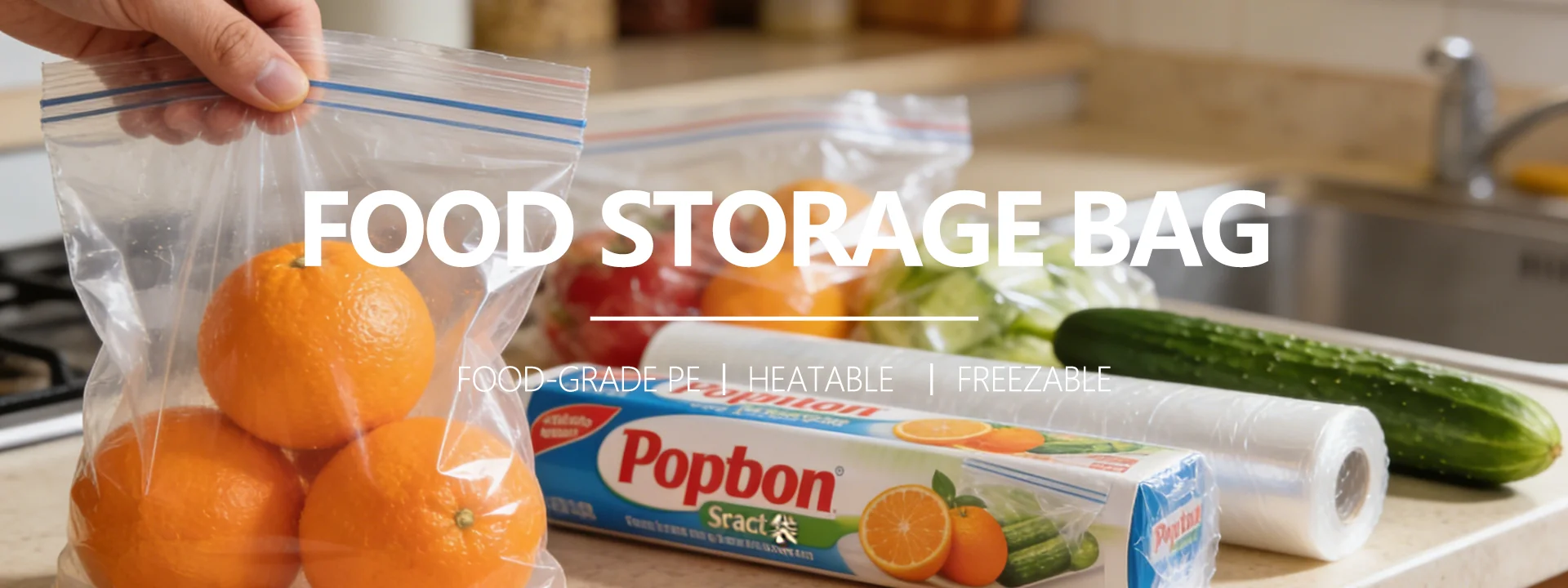
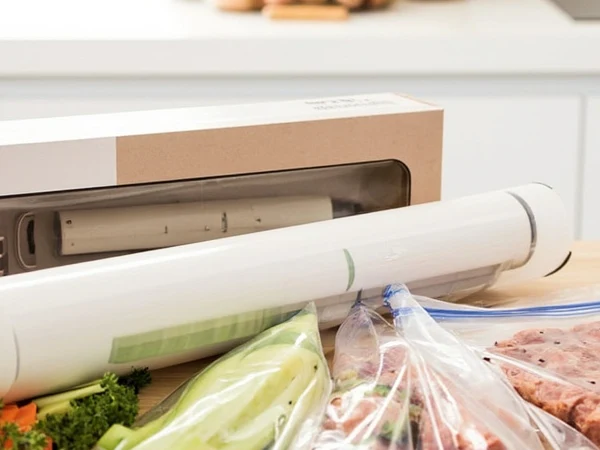
For cling film the equivalent is the cutter box and the serrated edge. Boxed PE cling film with an integrated cutter box is the most mature handling structure in retail and supermarkets today, while roll formats depend on an external cutting rack or on the user finding a knife. Cut quality comes down to tooth pitch and tooth profile: too wide a pitch gives a ragged tear, too narrow a pitch makes the film stick at the edge so it will not tear but drags out a length of film instead. The roll core also has to be indexed so that the film passes flat across the teeth; otherwise every cut comes out creased or angled.
Baking paper follows the same logic in a simpler form. Pre-cut sheets are produced in standard tray sizes, square or round, so the user takes one and uses it without trimming. Full sheets need a tear line printed into the paper so that users do not tear them at random and leave a ragged edge that affects presentation.
4. What These Three Structures Actually Change
On the retail side, hang holes decide whether bagged products can enter cold cabinet and shelf systems in the first place. Handling structure affects display efficiency and shelf appearance, and it affects repeat purchase: a bag that swings unstably on a hook, or one that leaks every time it is lifted, is a bag many shoppers will not buy a second time.
In homes and kitchens, handle holes and cut points decide whether one-handed operation is realistic at all. What actually gets saved is waste. A roll of cling film with no scissors to hand is often discarded half used, and a portion bag that can only be dragged by its mouth tends to drip its contents across the worktop and floor. Whether the handling structure is qualified ends up showing up as a difference in food waste and in cleaning workload.
On the production side, handling structure means extra steps. Punching and die cutting add stations and tooling to the converting line, and the strength of the hole zone affects the heat seal window that follows: a hole too close to the sealed edge makes the bag mouth crease and seal off-centre in the sealer, while slightly higher sealing pressure is enough to crack the hole edge. Baodafor's approach is to offer handle holes, hang holes and cut points as optional structure items inside the specification system, confirming hole position, hole size and the distance to the sealed edge with the customer during sampling, and scheduling production only after the sample is confirmed, instead of relying on thicker film and rework once the run is under way.
Conclusion
Material performance decides how well a pack protects food; handling structure decides how well it is used, displayed and consumed. Handle holes, hang holes and cutter boxes on ziplock bags and cling film look like converting details, but they connect retail display efficiency, kitchen usability and line stability at the same time. Treating them as part of the specification and settling them at sampling is the cheaper route.