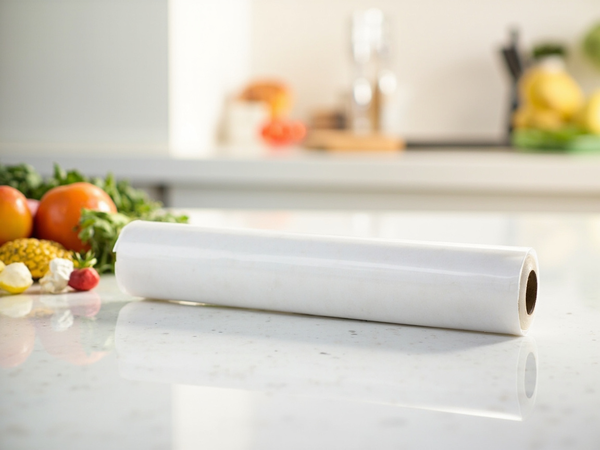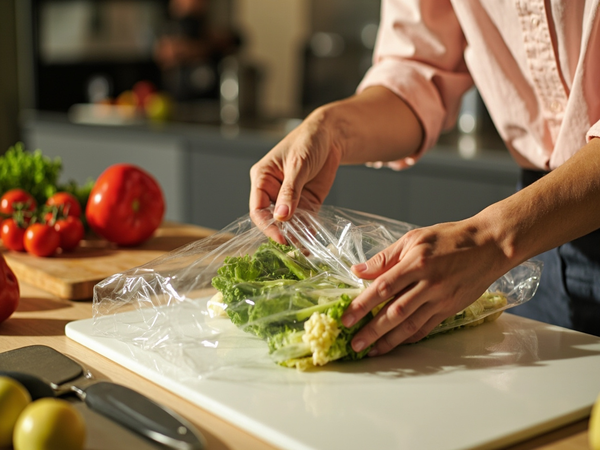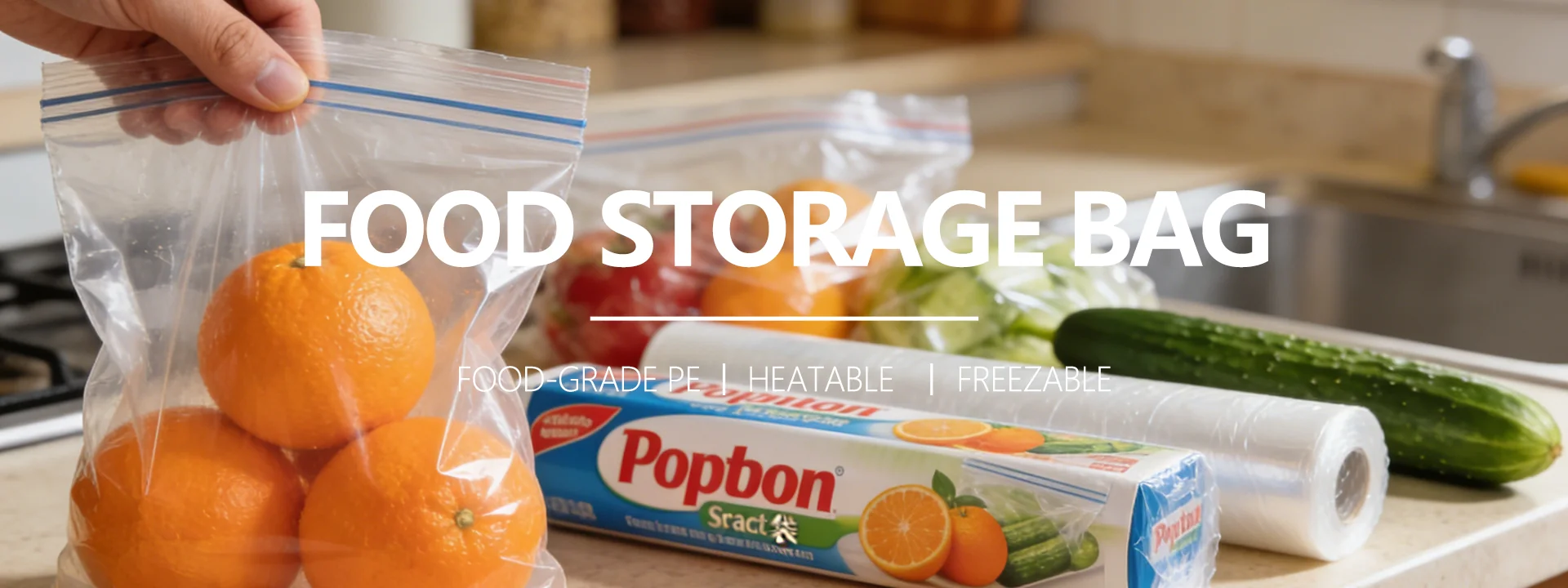
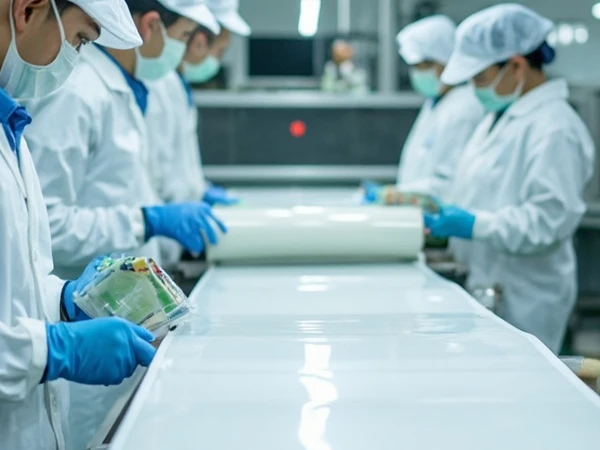
Cling wrap is one of the most commonly used保鲜 tools in household kitchens and the food processing industry, but the three main materials available on the market — PE, PVC, and PVDC — differ significantly in terms of safety, temperature resistance, and preservation effectiveness.
PE (Polyethylene) cling wrap is the most common type, offering high safety and a temperature resistance range of approximately -60°C to +110°C. It is suitable for refrigerating food and general household use. PE cling wrap has good breathability and works well for short-term preservation of vegetables and fruits, though its sealing performance is relatively weaker, making it less suitable for long-term meat storage.
PVC (Polyvinyl Chloride) cling wrap may release plasticizers at high temperatures, posing certain health risks. As a result, its use in food packaging has been gradually restricted in recent years. PVC cling wrap offers higher transparency and better stretchability but is not suitable for direct contact with high-fat foods.
PVDC (Polyvinylidene Chloride) cling wrap offers the best preservation performance among the three materials. With its low permeability rate and wide temperature range (-60°C to +140°C), it effectively blocks oxygen and water vapor, making it ideal for meat, cheese, and other foods requiring long-term preservation. However, PVDC cling wrap comes with higher production costs and a correspondingly higher market price.
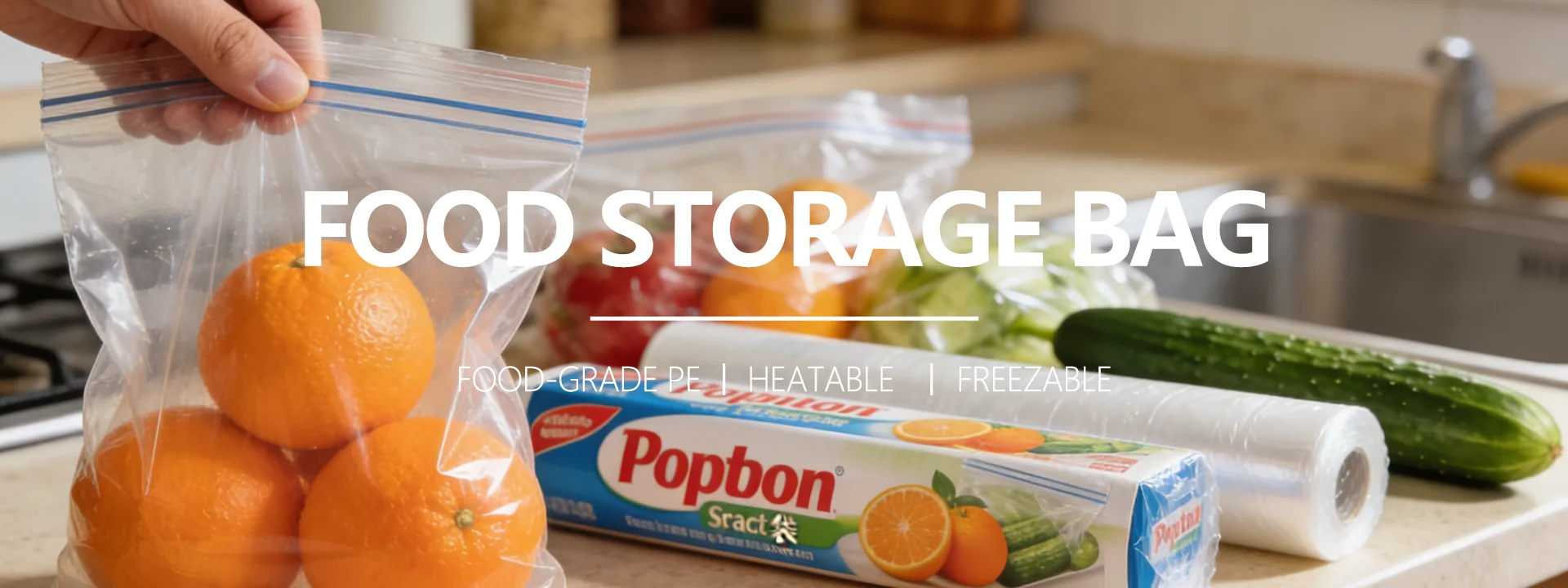
Baodafor advises consumers to select the appropriate cling wrap material based on their actual usage scenarios. For daily household use, PE cling wrap offers the best cost-performance ratio. For scenarios requiring long-term freezing or high-temperature heating, PVDC material products are the recommended choice. Baodafor produces food-grade PE cling wrap that strictly complies with national standards, providing consumers with safe and reliable food preservation solutions.