Categories
Tag: pe cling wrap
Found 131 article(s)

Baodafor Introduces Shift Handover Records and Exception Briefing to Keep Production Information Continuous Across Crew Changes
Batch consistency in continuous production often depends on whether the information passed between two shifts is complete. This article sorts out the five categories a handover has to carry - equipment and process state, material batches, quality state, exceptions and handling, and the condition of the floor - explains three working rules (the sheet and the face-to-face briefing, every exception assigned to an owner, verbal instructions written down within ten minutes), shows how handover connects first-article confirmation, process document version control and real-time abnormality response at the shift boundary, and shares the practical measures: fewer fields, crew-specific briefings, archiving by shift and batch, and narrowing the scope of a complaint.
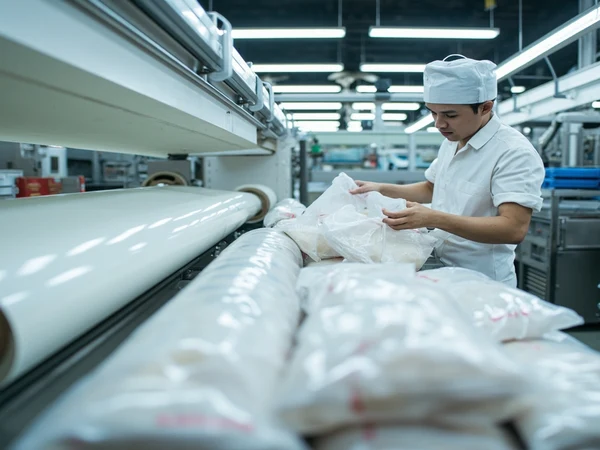
Antimicrobial and Active Packaging Move into Production: Food Packaging Shifts from Passive Barrier to Active Preservation
Once barrier performance nears its material limit, shelf life is constrained by microbial growth and condensation rather than gas permeation. Antimicrobial and active packaging intervene actively inside the pack through oxygen scavenging, CO2 control, moisture management and antimicrobial agents. This article reviews the three active-packaging routes, antimicrobial application methods and testing practice, maps the roles of ziplock bags, PE cling wrap, aluminum foil and baking paper, and analyzes the regulatory, cost, verification and temperature barriers to adoption.

Date Marking and Batch Coding on Food Packaging: Making Room for Traceability on Ziplock Bags and Cling Film
Batch numbers, production dates and storage conditions all end up on the package, yet the printable area is often the tightest space in a custom printed project. This article compares four identification positions - a reserved block on the front, the back information panel, a horizontal strip along the bag opening and the margins flanking the zipper - explains how the code position interacts with the seal line, the zipper track, the edge distance and oily contents, reviews how corona treatment and primer affect adhesion, why dark and matt areas are hard to read, how character specification must match the coding equipment, and how PE cling wrap ties batches through core labels and end-face printing. It also sets out test coding, first-article confirmation and segregation of wrong batches at changeover.

Baodafor Standardizes Gowning and Personnel Hygiene Entry Controls to Protect Food Contact Surfaces
In a food packaging workshop the first contamination source is usually a person. Baodafor applies one gowning and entry standard across its ziplock bag, PE cling wrap, aluminum foil and baking paper lines: five sequential steps from shoe change and hand washing to work coat, hairnet, mask and gloves; explicit replacement triggers; special entry rules for visitors and maintenance staff; and pre-shift confirmation, in-shift patrol, exception closure and record keeping. The article also explains how customers can write cleanliness clauses into quality agreements and verify the records during an audit.

Surface Treatment and Printability: What Causes Ink and Adhesive Failures on Ziplock Bags and Cling Film
Flaking ink, lifting labels and smudged codes are rarely a consumables problem; they usually point to insufficient surface energy on the film itself. This article explains surface tension, corona treatment and the sealing face, sets out the five usual causes of adhesion failure, describes three measurable checks for the shop floor, and shows how to write surface criteria into a purchasing technical agreement so both sides judge acceptance on the same numbers.

Baodafor Establishes Version Control for Process Documents and Work Instructions Across Production Lines
Outdated process documents are one of the most underestimated hidden quality costs on a packaging line. This article explains how a superseded work instruction turns into a batch of defects, and lays out the full mechanism Baodafor uses: four document categories under one numbering rule, six controlled steps for every revision, workstation error-proofing, and weekly checks with quarterly reviews.

Grain and Rice Packaging Demand Rises: How Ziplock Bags, Aluminum Foil and Cling Film Divide the Work
Grain and rice packaging is moving away from one-bag-does-everything toward a division of labour across storage, transport and retail. This article breaks down the indicator priorities for ziplock bags, aluminum foil, cling film and baking paper at each stage, and gives buyers three practical tips: split the requirement by stage, check grammage and seal strength before comparing price, and validate on a small batch.

Clarity and Haze in Food Packaging Films: How the Optical Performance of Ziplock Bags and Cling Film Shapes Shelf Display and Product Visibility
Transparency, haze and gloss are the three optical specifications of packaging film that get overlooked most often yet are the most immediately visible. This article breaks down the four deciding factors - resin grade, additive ratios, the blown-film and stretching process, and gauge uniformity - explains how storage and ageing shift optical performance, and sets out a three-step check for incoming material together with indicator priorities for different packaging scenarios.

Baodafor Introduces First-Article Confirmation and Line Release to Move the Quality Gate Ahead of Batch Production
Baodafor makes first-article confirmation a mandatory step before every startup, changeover and restart, with sampling, comparison, judgement and documentation forming a closed loop that moves batch-level quality risk ahead of the first piece instead of letting one small deviation be copied thousands of times.
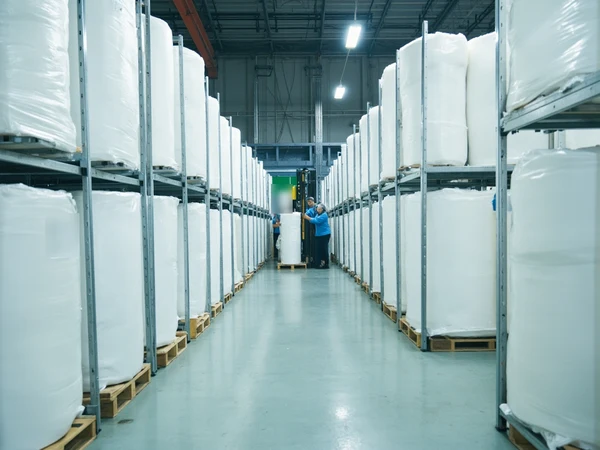
Baodafor Standardizes Raw Film Roll Storage Conditions and FIFO Management to Bring Every Roll to the Line in Stable Condition
Raw film rolls are the first checkpoint of food packaging quality, and moisture, aging, dents and mixed batches all get amplified on the line. Baodafor manages this through storage environment control, first-in-first-out picking with batch cards, quarantine of abnormal rolls and a defined handover from warehouse to production line, so every roll reaches the line in stable condition.