Baodafor Standardizes Die Cleaning and Screen Change on Film Blowing Machines: Controlling Film Thickness and Cleanliness Upstream
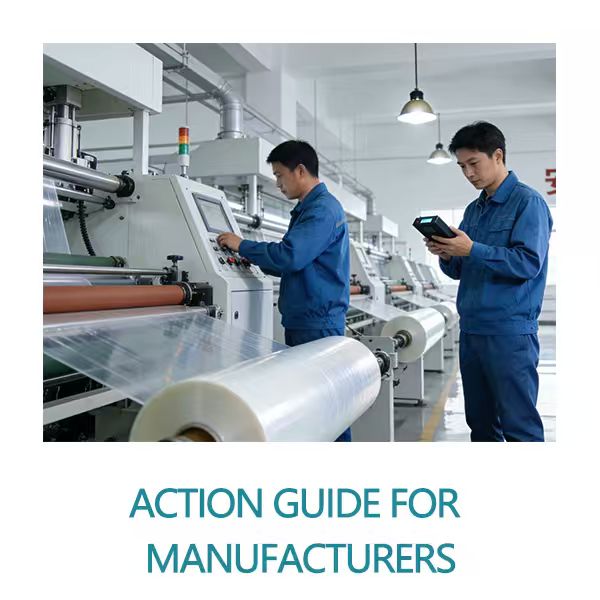
On a blown film line, the starting condition of a roll of PE food packaging film is not decided by the slitter, not by the winder, but by two unglamorous components: the die and the screen pack. Once the melt leaves the extruder, it passes the filter, then takes shape in the die, and only then is blown, cooled, trimmed and wound. Every trace of residue and every second of thermal history gets amplified by blowing and cooling and shows up on the roll: thickness running thin, uneven edge slopes, specks on the surface, or an off-note odor in the material. When those defects surface at the bag-making station or in the customer's warehouse, it is usually very hard to reconstruct what actually happened upstream.
At Baodafor, die cleaning and screen change are not something a maintenance technician does on the side. They are a defined operation with specified steps, a basis for judgment and a written record. Doing that operation well keeps thickness variation, surface cleanliness and batch consistency under control at the source.
1. Two components that decide where the film starts
The die is the last forming element before the melt becomes a film tube. The gap between the die mandrel and the die lip, and the compression ratio setting, determine how evenly the melt is delivered. In service, the die keeps accumulating material, and deposits form hot, degraded residue in the mandrel grooves and along the lip.
The screen pack is the last filtration barrier the melt passes. The combination of screen mesh sizes sets the filtration precision. If a screen is damaged or the screen changer is not clamped tightly, contaminants travel straight into the film. As a screen loads up with material, differential pressure rises, throughput changes, and extrusion rate and draw conditions drift with it.
What these two have in common is timing: when they go wrong, the film is still a roll. Nobody has looked at it yet, but the damage has already been written into the whole roll.
2. What an uncleaned or badly cleaned die does to the finished film
- Thermal degradation of residue. Material left in the grooves of the mandrel and on the lip stays at melt temperature and degrades progressively. It darkens, forms granular specks and can carry an off-note. For food contact materials this is not a cosmetic issue — it is exactly the kind of finding a customer will challenge.
- Deposits change the lip gap. A build-up on the lip acts like a new bump or hollow, so the delivered film thickness varies periodically and the edge side tends to run thin and uneven.
- Carbonized deposits create periodic lines. Irregular accumulation at the lip leaves regular thick-and-thin streaks in the film, and winding and unwinding magnify them across the full width of the roll.
- Tool damage is self-amplifying. Scraping a die lip with a steel blade leaves scratches and burrs. A damaged die carries those marks into every roll produced afterwards — an irreversible effect.
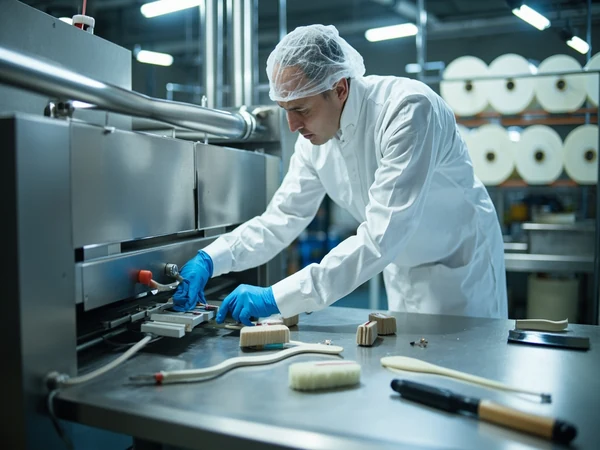
That is why die cleaning has a hard rule at Baodafor: only the specified non-metallic tools (copper plates, copper brushes, wooden cleaning sticks) and the designated cleaning materials are used, always in a fixed direction and never bearing directly on the lip surface. Cleaning is confirmed by eye and by touch afterwards. Speed is never bought by scraping harder.
3. Screens should not be changed only when they are already blocked
Changing a screen only after it is blocked has already cost something: rising differential pressure increases melt resistance, output drops, draw conditions shift and thickness variation follows; a screen that breaks under high differential pressure lets contaminants into the film; and if the fragments of the old screen are not cleaned out, the new screen is punctured again almost immediately.
The steadier approach is to judge by trend rather than by blockage. Differential pressure, main motor current, output per hour and the visual check results around each screen change are recorded, and the screen is replaced when the trend says so. The change itself has to follow safety and quality rules: reduce speed, depressurize and cool to the specified temperature before opening the screen changer, so hot melt cannot drip; install the screen set flat, correctly sequenced and firmly clamped, with no misalignment or bypass; then restart at low speed and purge until no specks, no odor and no color shift appear before running up to full output.
4. The standard sequence for a die cleaning and screen change
- Stop and slow down. Follow the defined order to slow down, stop, depressurize and cool down to a temperature where the die and screen changer can safely be opened.
- Clean the die. Remove material from the mandrel grooves and lip with copper plates and brushes, then wipe the contact surfaces with the designated cleaning material, never letting hard tools touch the lip. Check afterwards that the lip is straight and free of residue.
- Change and clamp the screens. Fit the screen combination required by the process, confirm the screen changer is clamped, that the screens are flat and not folded or misaligned, and route the removed screens and fragments through the waste process instead of leaving them around the machine.
- Restart and trial the material. Run a short low-speed trial, check thickness, look for specks and streaks on the film, check odor, and confirm the roll winds smoothly. Anything abnormal is handled before speed is restored.
- Record and keep the evidence. Write the screen change time, die cleaning status, screen specification used, trial roll number and check results into the log, linked to the batch.
Records earn their keep the moment something goes wrong: when a customer reports a problem with a roll, being able to answer "when was the screen last changed, which screen specification was used, what was the die cleaning status" is the difference between precise diagnosis and guesswork.
5. Different products do not need the same upstream cleanliness
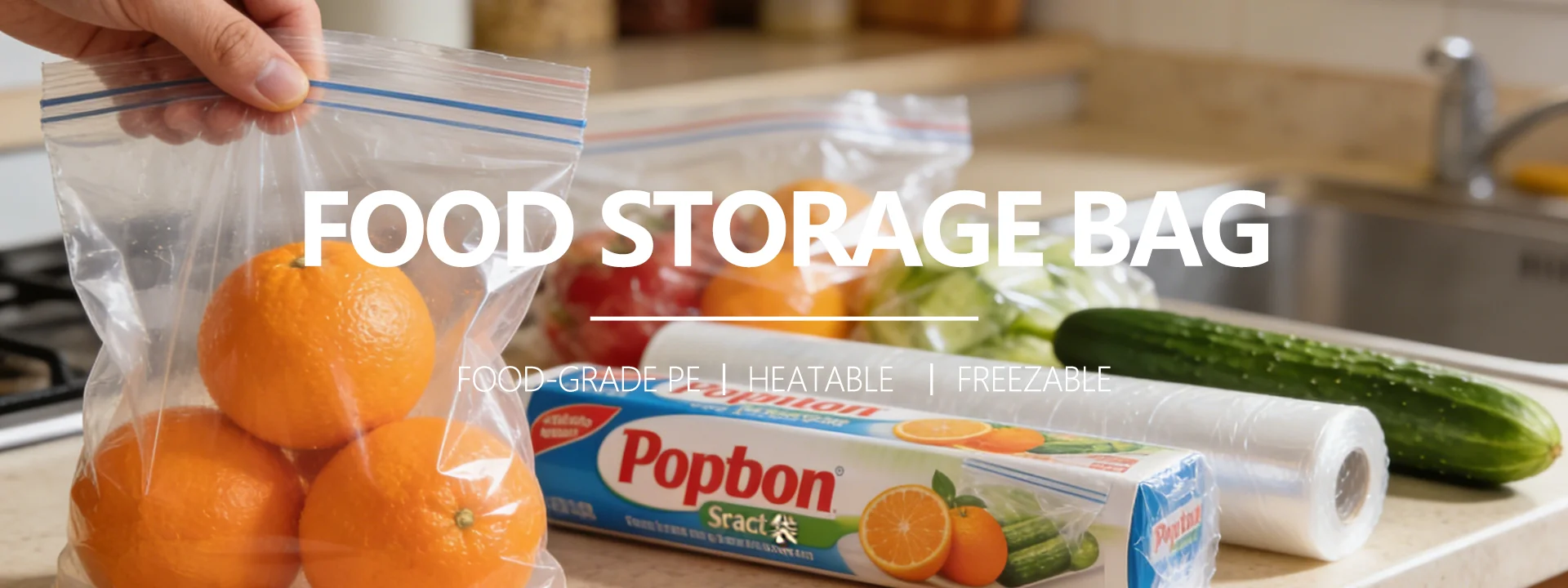
PE cling wrap is sensitive to surface appearance: deposits on the lip and the filtration precision show up directly in haze, clarity and how the roll runs on the machine. Specks on the film immediately cost shelf appeal in the supermarket.
Film for ziplock bags cares more about thickness consistency. When gauge varies, the bag dimensions drift after bag making, and the conditions for heat sealing shift with it. A contaminant that lands in the sealing area can also become a weak seal or a leak path.
Aluminum foil and baking paper are just as sensitive at the coating and laminating stage: creasing, roll flatness and foreign material control upstream directly affect coating uniformity and the peel strength of the laminate.
Food contact packaging carries one extra requirement. Upstream cleanliness is the first gate of the whole compliance chain — if the starting point is not clean, every later operation is only patching.
6. Three changes this working standard brings
Defects are caught earlier. Specks, streaks and thickness deviation are stopped at the screen change instead of being picked out at final inspection, which lowers both handling cost and escape risk.
Batches become comparable. With screen changes and die cleaning linked to batch records, swings in thickness, haze and appearance can be traced to a specific process event, instead of ending with "probably the equipment".
Screen change frequency becomes data-driven. Screens are neither left in service until they fail, nor changed on a fixed calendar that wastes machine time and material.
For food packaging materials, thickness and cleanliness have never been problems that final inspection can catch. They are results carried all the way down from the upstream end. A clean die, a properly clamped screen, and records that match what actually happened — these small, dull actions are the real reason food-grade film can be handed to a customer with confidence.