
Alcohol Packaging Goes Multi-Format: How Aluminum Foil Bottle Seals and Ziplock Bags Split the Work in Draft Beer and Bulk Wine
For most of the past decade, a single format dominated alcohol retail: the glass bottle. Producers filled it, distributors labelled it, retailers shelved it, and the same route carried every bottle from plant to consumer. Retail has now shifted in a clearly visible way. Small-batch craft breweries reach food-service venues as kegs and pouches of draught beer rather than as bottles. Bulk wine, pre-mixed drinks and small-format portioning packs have moved into e-commerce and community-group channels, while imported wines arrive on supermarket shelves with aluminum foil liner seals and a range of label constructions. Packaging has moved from one format to bottle, keg and pouch running side by side.
The direct consequence is that sealing and barrier performance are no longer handled by one component. The work has been broken up across different materials, and that changes what each material has to do.
For packaging suppliers, the practical consequence is that the boundaries between aluminum foil, ziplock bags and PE cling wrap need to be redrawn for the beverage segment.
One: Bottle-mouth sealing, and the three jobs the aluminum foil liner does
Before the crown cap is pressed down, an aluminum foil composite liner sits inside the bottle mouth. Pressed against the glass, it forms a continuous seal. The liner's job is not a single function.
First, blocking oxygen and light. Wine is sensitive to both oxygen and ultraviolet light, and glass transmits light readily, while aluminum foil is essentially opaque. For wines meant to be held for longer periods, that difference has a direct effect on how fast quality degrades.
Second, tamper evidence and anti-counterfeit function. A foil liner that has been lifted away leaves obvious damage, which makes it a usable integrity signal before the bottle is opened, and the most basic layer of an anti-counterfeit labelling scheme.
Third, working with labels and shrink film. The outer diameter of the liner has to match the closure, and there must be no unsupported gap between label and cap; otherwise shrink film pulling tight will create wrinkles and trapped air under the label.
When aluminum foil is specified for a bottle liner, the points that need attention are the fit with the closure, how flat the seal area remains after pressing, and whether a vent hole is needed for bottles with a pour spout or an elongated nozzle. Food-contact metals have to meet the additive and migration requirements of the GB 4806 series as well. A piece described as a liner is still a food-contact component.
Two: Keg and draught beer pouches, where PE ziplock bags earn their place
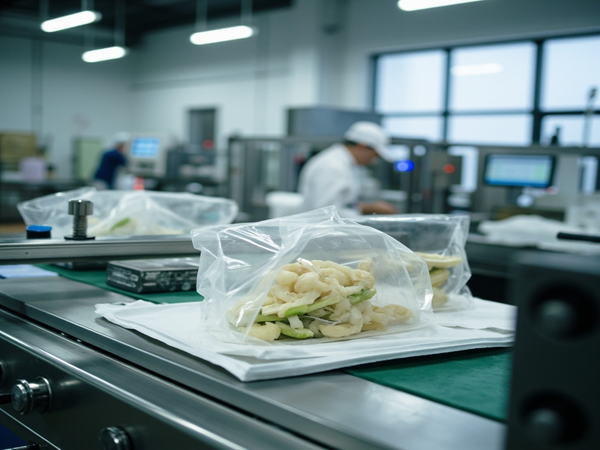
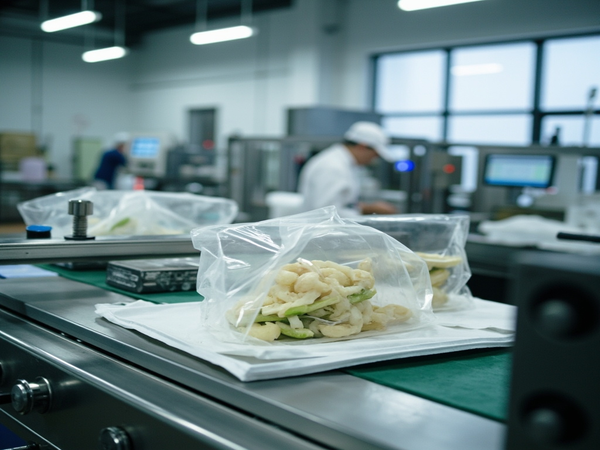
Keg draught beer sold through food service, and small-format pouches of draught beer for retail, have given PE ziplock bags a new position in the beverage segment. These bags are harder than dry-goods pouches by a full grade.
Liquid is far less forgiving of the seal structure. A dry-goods bag only needs a flat seal. A liquid bag needs a heat seal area with no wrinkles and no product residue, otherwise the seal will slowly pull open under the weight of the contents. The bag has to be evacuated before filling, and residual liquid near the heat seal line becomes a leak path.
Product clinging to the sealing jaw and leftover residue interfere with the next cycle. The bag mouth is gripped during filling, and any jaw mark landing in the seal area is a defect, so the distance between the filling and sealing stations and the way the bag is presented have to be designed together.
Low-temperature toughness matters just as much. Draught beer lives in a chiller or an ice cabinet, and PE loses toughness as the temperature falls. The bag body, and especially the gusset, tends to stiffen and crack. Temperature at storage and the gusset-forming process therefore have to be settled before filling begins.
Short-term freshness also involves light. Ziplock film is transparent on its own and has to be paired with an aluminum foil laminate or an outer light-blocking carton. This point is regularly overlooked when shelf life for pouched draught beer is discussed: barrier performance is a combination, never a single number.
Three: Bulk wine and portioning retail, where small bags become repeat consumables
Bulk wine, small-format spirits portioning, and e-commerce shipments that are case-picked at a distribution point and then portioned at the store used to be treated as temporary packaging. As more outlets pour and pack to order, portioning bags have become regular consumables.
Their requirements differ again. Capacity and mouth size are small, so the liquid level sits almost at the seal line, and seal strength and leak resistance are more demanding than for dry goods. The packs sit in a chiller on display, where bag transparency is fully exposed under cabinet lighting. The same batch has to remain traceable to its source, so labels or codes must avoid the seal edge and the gusset.
In this application the usual ziplock format is a small capacity with a zipper or an easy-tear opening, and baking paper is used as a divider and moisture barrier so bottled containers do not knock against each other in transit.
Four: Inside the winery and brewery, where cling wrap and ziplock bags take the temporary role
In wineries and breweries, temporary storage steps produce uses that look unimpressive but run constantly: covering the mouths of fermentation tanks, decanters and interim vessels, and protecting containers during turnaround.
During fermentation and storage, vessel openings stay exposed for long periods. They need protection from dust while still allowing some gas exchange, and a ziplock bag or PE cling film serves that covering role. Bags used for turnaround are valued for reuse: one batch of bags cycles through the job and spreads the cost across many trips. In decanting and racking, how long the liquid is exposed to air directly affects oxidation and aroma loss, so the sealing state of temporary storage is not a step to be trimmed.
The requirements here differ from retail packaging. Tear resistance, puncture resistance and the number of reuse cycles matter far more than shelf appearance.
Five: Three traps when specifying materials
Treating the barrier performance of aluminum foil as the freshness of the wine inside the bottle. The foil solves the seal at the mouth and the light from outside. How the wine holds after the bottle is opened is a separate question, and the two should not be discussed as one.
Looking at seal strength alone and ignoring the filling position. Leak points in liquid packaging are often not in the sealing parameters themselves, but in whether the bag mouth was gripped during filling and whether liquid was left inside before sealing.
Skipping low-temperature acceptance testing. A bag that passes at room temperature may already be stiff and cracked in a chiller. Acceptance conditions for beverage applications should state the temperature and the storage duration explicitly.
Six: Where the shift lands for material suppliers
The move to multiple alcohol packaging formats is, in the short term, a consequence of how retail channels changed; in the longer term it is the same process as flexible packaging working deeper into liquid foods. Once a category goes from having one packaging format to running several in parallel, material suppliers have to divide the work by scenario rather than supply by category.
In practice this means combining aluminum foil laminates, PE film blowing and bag making, and baking paper dividers in one supplier, so that a single order can cover the bottle mouth, the bag body, the divider and the temporary covering. That combination is where a professional packaging material supplier separates itself from a single-product converter.